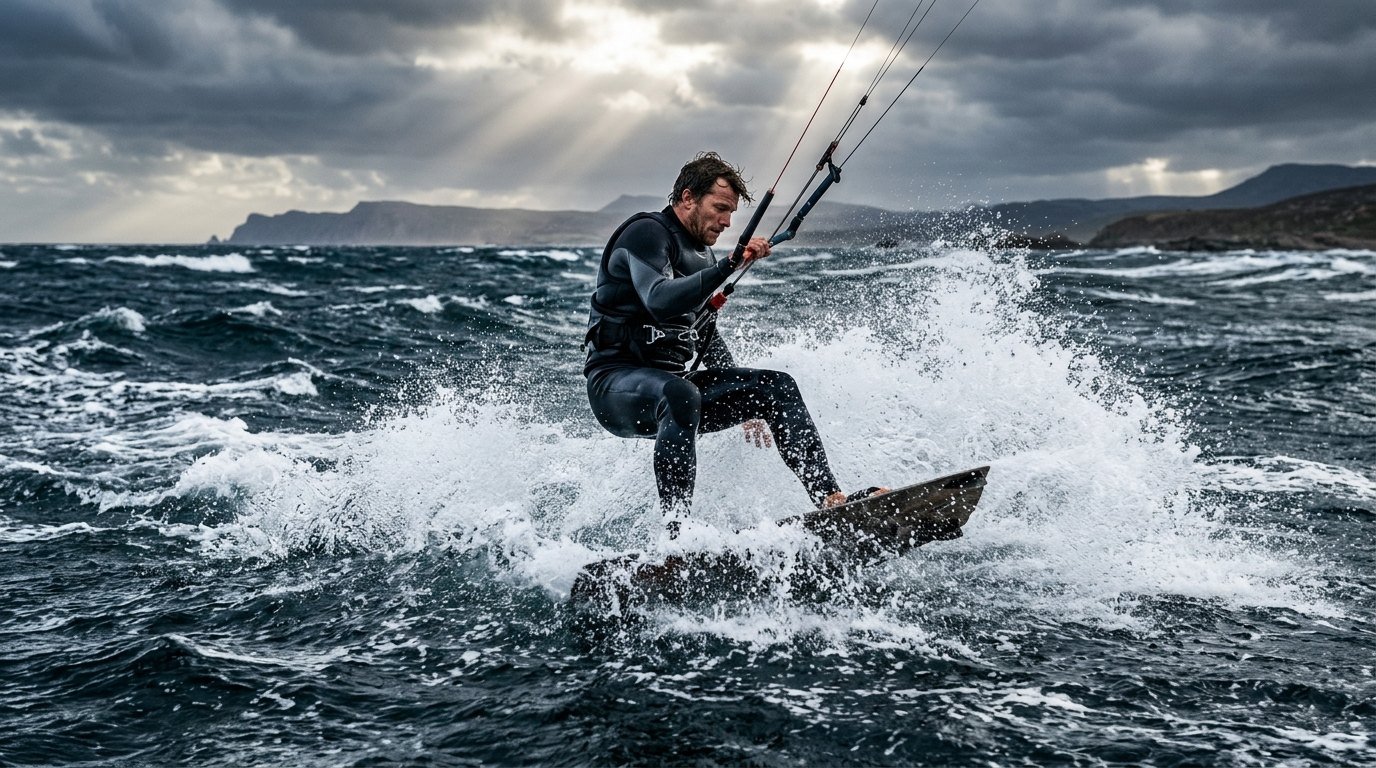
Your bones are living tissue. They're constantly being broken down and rebuilt, and they adapt to the loads you give them, just like muscle. Bone mass peaks around age 30. After that, unless you do something about it, it slowly declines, and faster for women after menopause.
For kiters, strong bones are crash insurance: wrists that survive a bad fall, ribs that handle a slam, hips and spine that stay solid into your 70s.
1. The Water Sports Catch
Here's the part most kiters don't know: bones respond best to impact and heavy loading, the kind you get from running, jumping and lifting on land. Water supports your body, and landings are cushioned compared to hitting the ground. Research on swimmers and cyclists has shown that athletes in low-impact sports can have lower bone density than you'd expect for their fitness level.
Kiting has some impact (hard landings, chop), but it isn't a reliable bone builder on its own. That's easy to fix.
The Proof That It Works
In the LIFTMOR trial (Watson et al., Journal of Bone and Mineral Research, 2018), women with low bone mass did 30 minutes of heavy lifting and jumping twice a week for eight months. Their bone density improved at the spine and hip, while the control group's kept declining. Heavy, impact-based training was safe and effective even for people who already had weak bones.
2. The Bone-Building Routine
1. Jumps and Hops
Box jumps, jump squats, skipping, or simple hops on the spot. Short, sharp impacts send a strong signal to your bones. Start small and build up, especially if you have knee issues.
2. Heavy Strength Training
Lifting weights you can do 5 to 8 times with good form loads the spine and hips, exactly where fractures hurt most later in life. Pair it with the core work in Defending the Lumbar Spine.
3. Carry Things
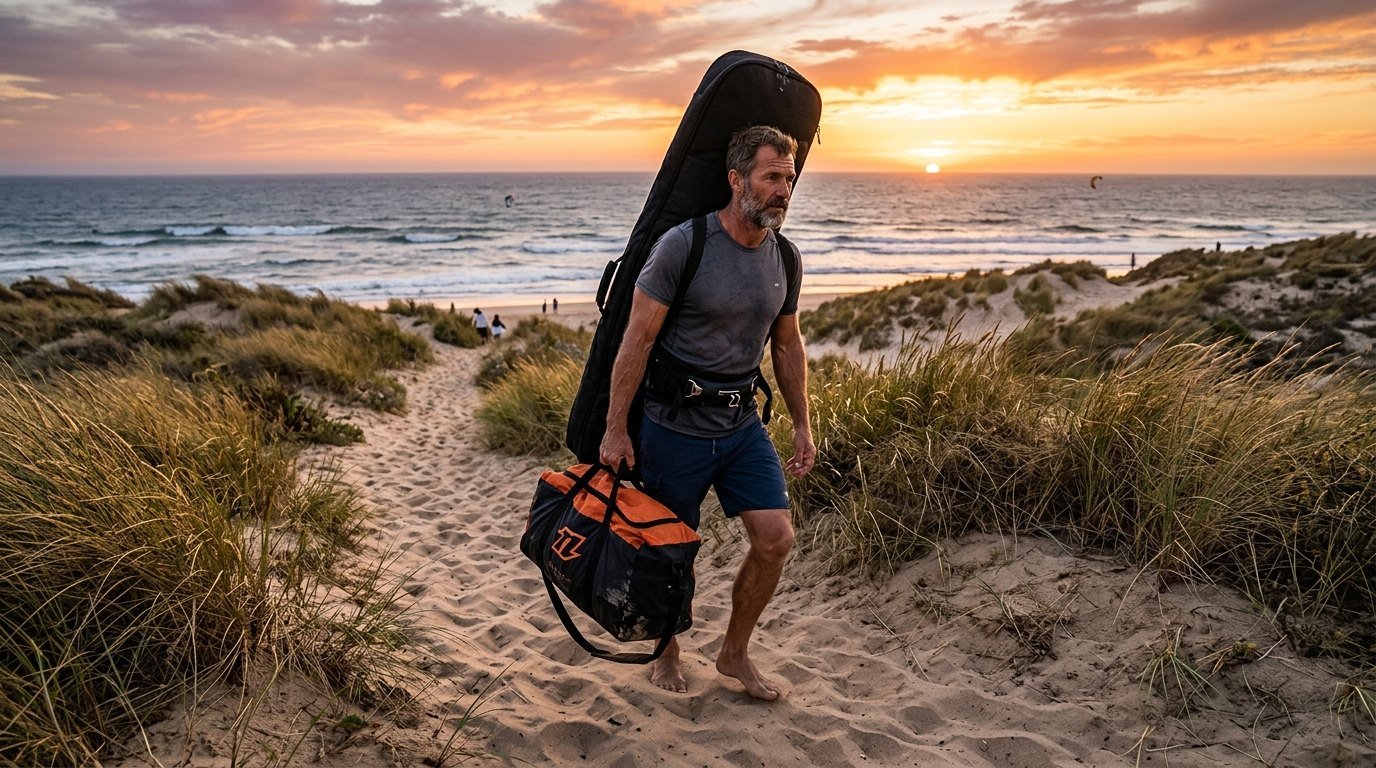
Walking with heavy weights in each hand loads your whole skeleton and builds grip strength for the bar. Carrying your quiver up the beach counts.
3. Feed Your Bones
- Protein: About half of bone volume is a protein matrix (mostly collagen). Enough protein supports bone strength, especially as you age.
- Calcium from food: Dairy, canned fish with bones, leafy greens, almonds, tofu.
- Vitamin D3: You need it to absorb calcium. Ironically, kiters in wetsuits and sunscreen, or riding in the northern winter, can still run low. Worth testing.
- Vitamin K2 (MK-7): Helps direct calcium into bone. In a three-year study of postmenopausal women (Knapen et al., 2013), daily MK-7 reduced the age-related loss of bone mineral density.
- Ca-AKG: In a study of postmenopausal women with low bone density, calcium alpha-ketoglutarate helped slow bone loss (more in Reversing the Biological Clock).
The DoNotAge daily sachet we take covers several of these in one go: vitamin D3 (125 µg), vitamin K2 as MK-7 (120 µg), magnesium and 800 mg of Ca-AKG. Combined with lifting, jumping and real food, it's an easy way to keep the frame solid.
Build Crash-Proof Bones (10% Off)
Vitamin D3, K2 (MK-7), magnesium and Ca-AKG are all in the DoNotAge daily sachet, together with NMN and 10 more longevity ingredients. Use discount code KITEHOMIEZ at checkout for 10% off your entire order.
Shop DoNotAge →Free: The Kiter's 10-Minute Flexibility Routine
The mobility and core routine we use before and after sessions, as a free PDF. Plus new videos and posts every few weeks.
This article is for general education and isn't medical advice. Talk to your doctor before starting a supplement or a fasting routine, especially if you are pregnant, have a medical condition or take medication. Some links on this page are affiliate links: if you buy through them, we earn a small commission at no extra cost to you.