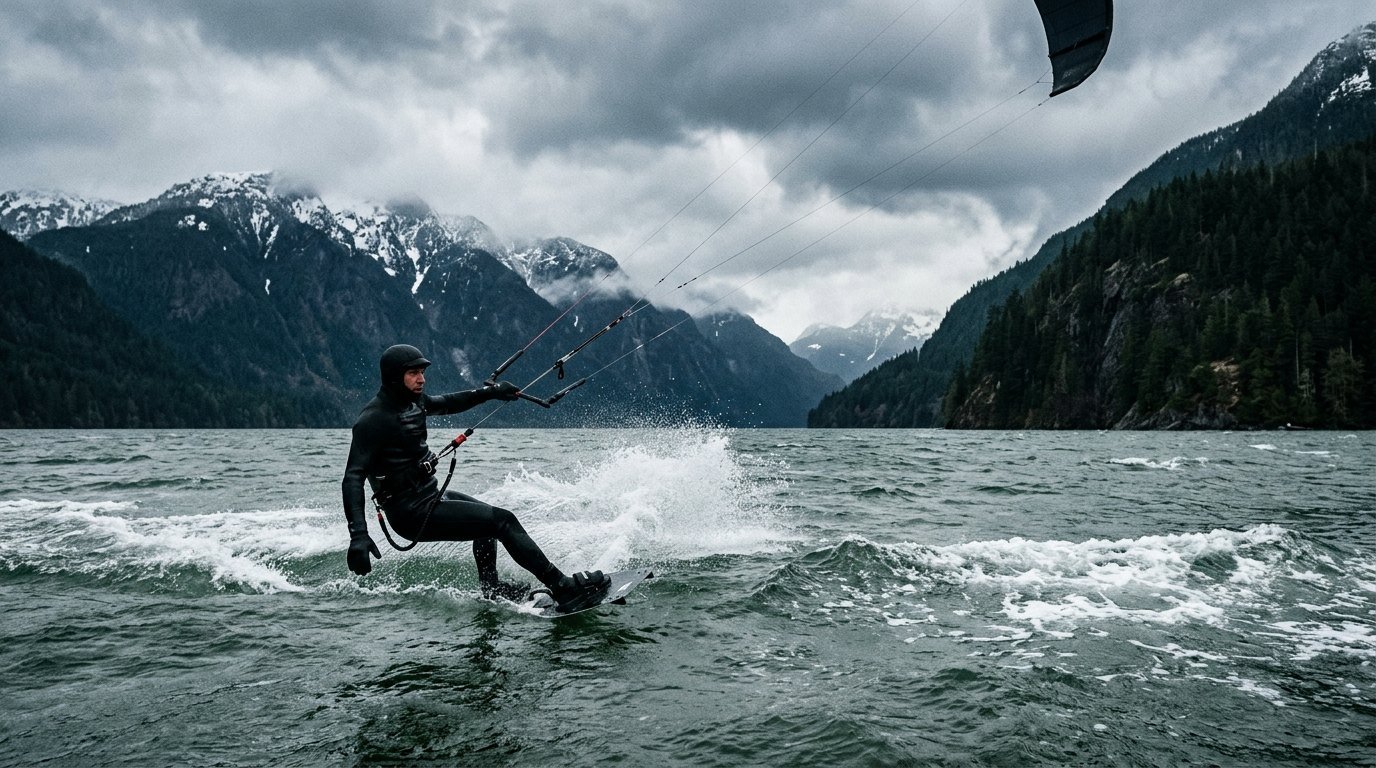
Cold-water kiting has its own magic: empty beaches, dramatic mountains, and that buzzing, wide-awake feeling after a session. It also has its own risks. Cold water pulls heat out of your body about 25 times faster than air at the same temperature, and the first minute in it can be dangerous if you don't know what's coming.
1. Know the Cold Shock: The 1-10-1 Rule
Cold-water researcher Gordon Giesbrecht popularized a simple way to remember what happens if you end up in cold water unexpectedly:
1 Minute: Control Your Breathing
Sudden cold triggers an involuntary gasp and fast breathing. That's when people inhale water. Don't panic, keep your head up, and focus on slow exhales until your breathing settles. It passes in about a minute.
10 Minutes: Meaningful Movement
After that, your arms and hands gradually lose strength and coordination. In cold water you have roughly 10 minutes of useful movement: use it to self-rescue, pack down the kite, or get to your board.
1 Hour: Before Hypothermia Knocks You Out
Real hypothermia takes much longer than people think. Staying calm, holding onto your board and keeping your head out of the water buys you time.
Why This Matters for Kiters
Most cold-water emergencies in kiting aren't hypothermia. They're losing the kite, a broken line or a long swim, and then running out of hand strength to self-rescue. Practice self-rescue in warm, easy conditions, so it's automatic when your fingers are numb.
2. Gear That Keeps You Riding
- Wetsuit: Rough guide: a 4/3 for cool water, a 5/4 or 6/5 with a hood when it gets genuinely cold. A good fit matters as much as thickness: flushing water is what makes you cold.
- Booties, gloves, hood: Hands and feet lose function first. Thin gloves on the bar keep your grip working much longer.
- Impact vest or buoyancy: Extra flotation helps a lot if you end up swimming in cold water.
- Ride with a buddy and tell someone on shore your plan. Downwind rescue in cold water is no joke.
3. Warm Up Longer
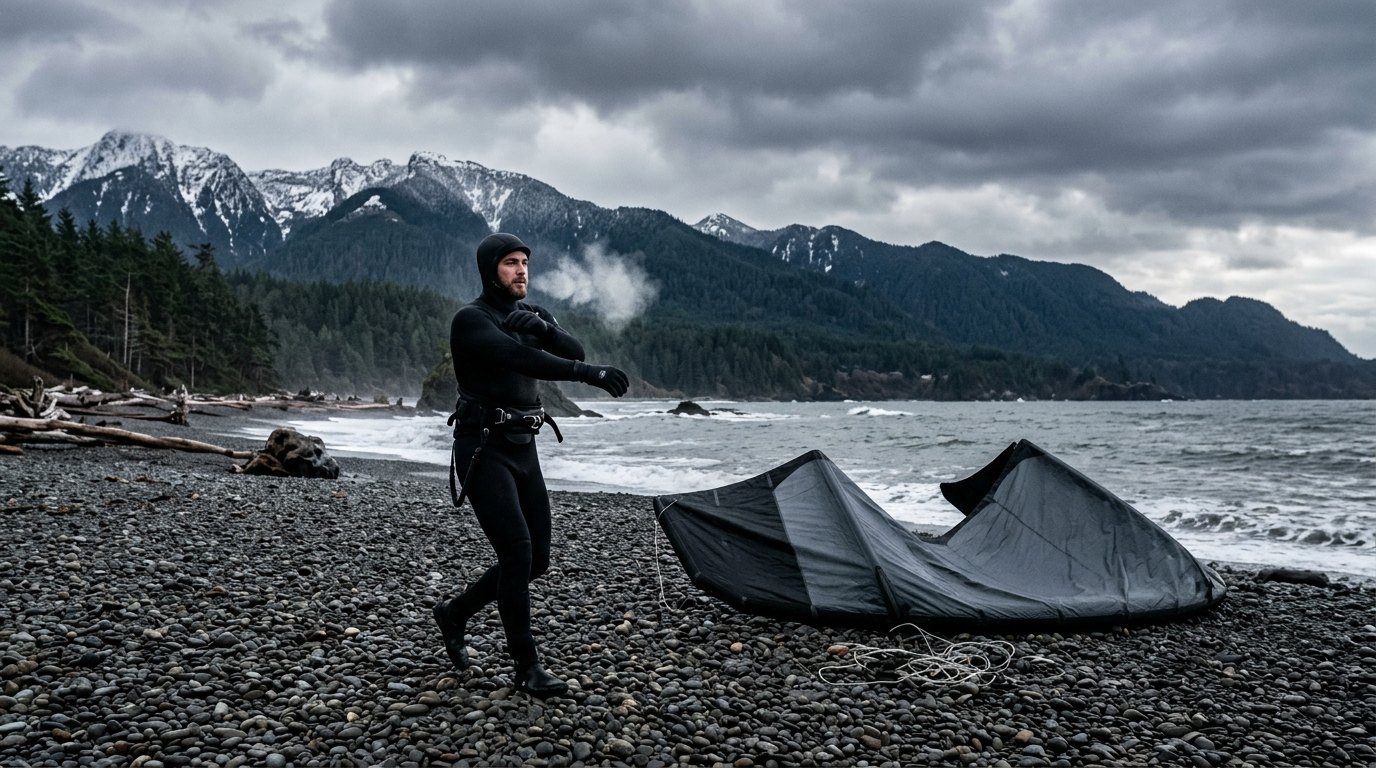
Cold muscles and tendons are stiffer and less elastic. That's when strains happen, especially on the first jumps. Before a cold session, spend 5 to 10 minutes on the beach:
- Jog on the spot, jumping jacks and arm swings to raise your body temperature.
- Thoracic rotations, Cossack squats and fire-hydrant circles to open hips and back (the full warm-up is in our free guide).
- A few squats and lunges to wake up your legs.
- Start easy on the water. Cruise for a few minutes before the first big pop.
4. Rewarm the Right Way
- Get dry and covered fast: Wind on a wet body is brutal. A changing robe is worth its weight in gold.
- Watch for "afterdrop": Your core temperature can keep falling for a while after you get out. Warm drinks and moving around help; extreme heat on numb skin doesn't.
- Eat something: Shivering burns a lot of energy.
5. The Upside of the Cold
Cold water isn't just something to survive. Research on cold exposure is genuinely interesting:
- Mood and alertness: In a Czech study (Šrámek et al., 2000), immersion in 14 °C water raised noradrenaline by about 530% and dopamine by about 250%. That's the "buzz" you feel after a cold session.
- Metabolism: Regular cold exposure activates brown fat, a type of fat tissue that burns energy to produce heat.
- One caution: If you lift weights for muscle growth, avoid jumping into cold water right after strength sessions. Research suggests regular cold immersion straight after lifting can blunt muscle gains. After kiting, it's fine.
And the best part of cold-water spots: you often have the whole place to yourself. For the sun side of things on warmer days, see Sun, Salt & Glare.
Watch Us Ride the Cold
Squamish sessions, kite trips and everything in between on the Kitehomiez YouTube channel.
Subscribe on YouTube →Free: The Kiter's 10-Minute Flexibility Routine
The mobility and core routine we use before and after sessions, as a free PDF. Plus new videos and posts every few weeks.
This article is for general education and isn't medical advice. Talk to your doctor before starting a supplement or a fasting routine, especially if you are pregnant, have a medical condition or take medication. Some links on this page are affiliate links: if you buy through them, we earn a small commission at no extra cost to you.