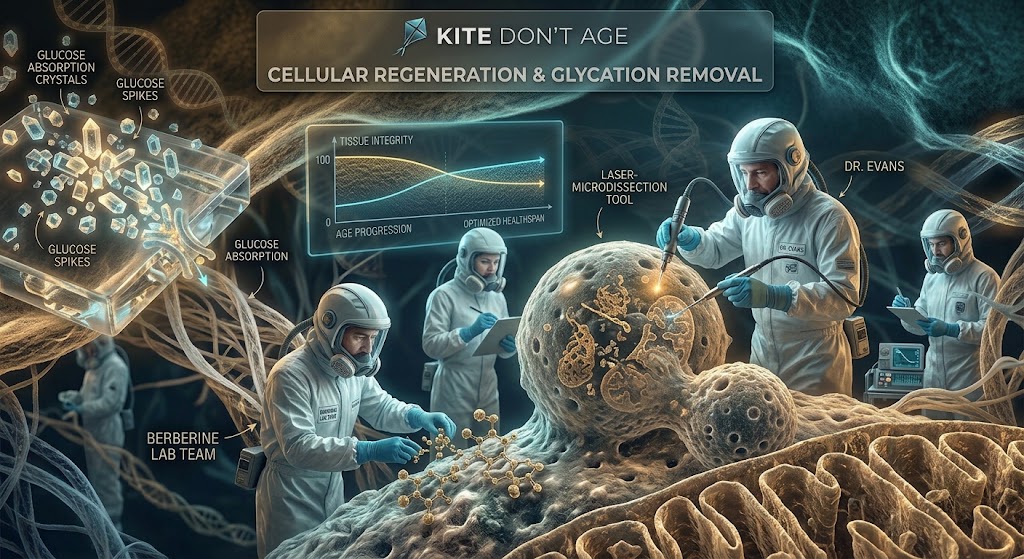
Kiting needs springy tissue. Your tendons store and release energy every time you pop, your arteries need to stay flexible to pump blood to working muscles, and your skin takes a beating from sun and salt. One quiet process works against all of them as we age: glycation.
1. What Glycation Does
When there's excess sugar in your blood, glucose molecules stick to proteins without any enzyme controlling it. Over time, these sticky bonds turn into advanced glycation end-products (AGEs). Collagen, which lasts for years in your body, is especially vulnerable:
- Stiffer tendons: AGEs cross-link collagen fibers like glue between the strands of a rope. The tendon gets stiffer and more brittle, and loses some of its spring.
- Stiffer arteries: The same process in blood vessel walls contributes to arterial stiffness and higher blood pressure.
- Older-looking skin: Glycated collagen in the skin makes it less elastic. Combined with sun damage (see Sun, Salt & Glare), it's a big driver of wrinkles.
- More inflammation: AGEs bind to a receptor called RAGE, which switches on inflammatory signaling and slows tissue repair.
The Good News
Glycation depends heavily on how high and how often your blood sugar spikes. That's something you can change with what you eat, when you move and a few smart supplements, starting today.
2. The Glycation Defense Protocol
1. Choose Real Carbs
Kiters need carbs; they fuel long sessions. Choose whole-food sources with their fiber intact, which slows how fast sugar enters your blood. Cut back on sugary drinks, pastries and ultra-processed snacks, the foods that cause the biggest spikes.
Timing tip: Have most of your carbs around riding and training, when your muscles soak up glucose like a sponge.
2. Eat Carbs Last
Studies on meal order show that eating vegetables and protein before the carbohydrate part of a meal noticeably lowers the glucose spike afterwards. Same food, smaller spike.
3. Walk After Meals
A 2022 review in Sports Medicine found that even light walking after a meal lowers the blood sugar spike that follows. At a kite spot that's easy: a walk along the beach after lunch to check the wind.
Why it works: Working muscles pull glucose out of your blood without needing much insulin.
4. Berberine Before Bigger Meals
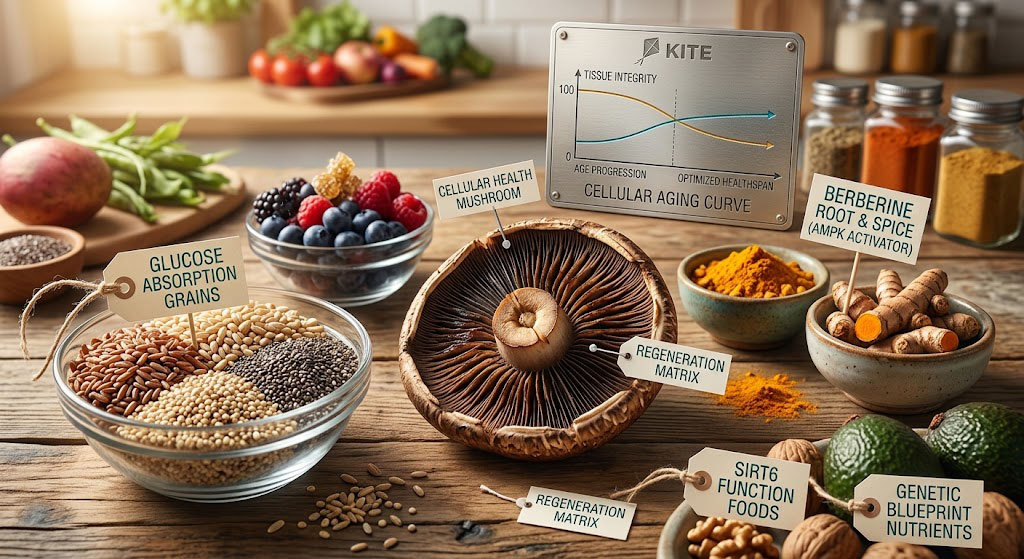
Berberine is a plant compound used for centuries in traditional medicine. It activates AMPK, the same energy sensor exercise switches on, helping your muscles take up glucose. In clinical trials in people with type 2 diabetes, berberine lowered blood sugar about as well as standard medication. If you take diabetes medication, talk to your doctor first.
5. Fasting Windows
A daily eating window gives your blood sugar a long, flat stretch and switches on cellular cleanup. Details in The Autophagy Shield.
3. Antioxidant Backup From the Daily Sachet
The DoNotAge daily sachet we take adds another layer: sulforaphane (from broccoli sprouts), which switches on your body's own antioxidant defenses through the Nrf2 pathway; resveratrol and quercetin, plant compounds studied for supporting healthy metabolism; and glycine, the most common amino acid in collagen. Add a berberine before bigger meals and you've covered the glycation problem from the plate, the muscle and the cell.
Protect Your Frame With DoNotAge (10% Off)
Pick up Pure Berberine for your bigger meals and the DoNotAge daily sachet for the rest of the defense. Use discount code KITEHOMIEZ at checkout for 10% off your entire order.
Shop Berberine & Daily Sachet →Free: The Kiter's 10-Minute Flexibility Routine
The mobility and core routine we use before and after sessions, as a free PDF. Plus new videos and posts every few weeks.
This article is for general education and isn't medical advice. Talk to your doctor before starting a supplement or a fasting routine, especially if you are pregnant, have a medical condition or take medication. Some links on this page are affiliate links: if you buy through them, we earn a small commission at no extra cost to you.