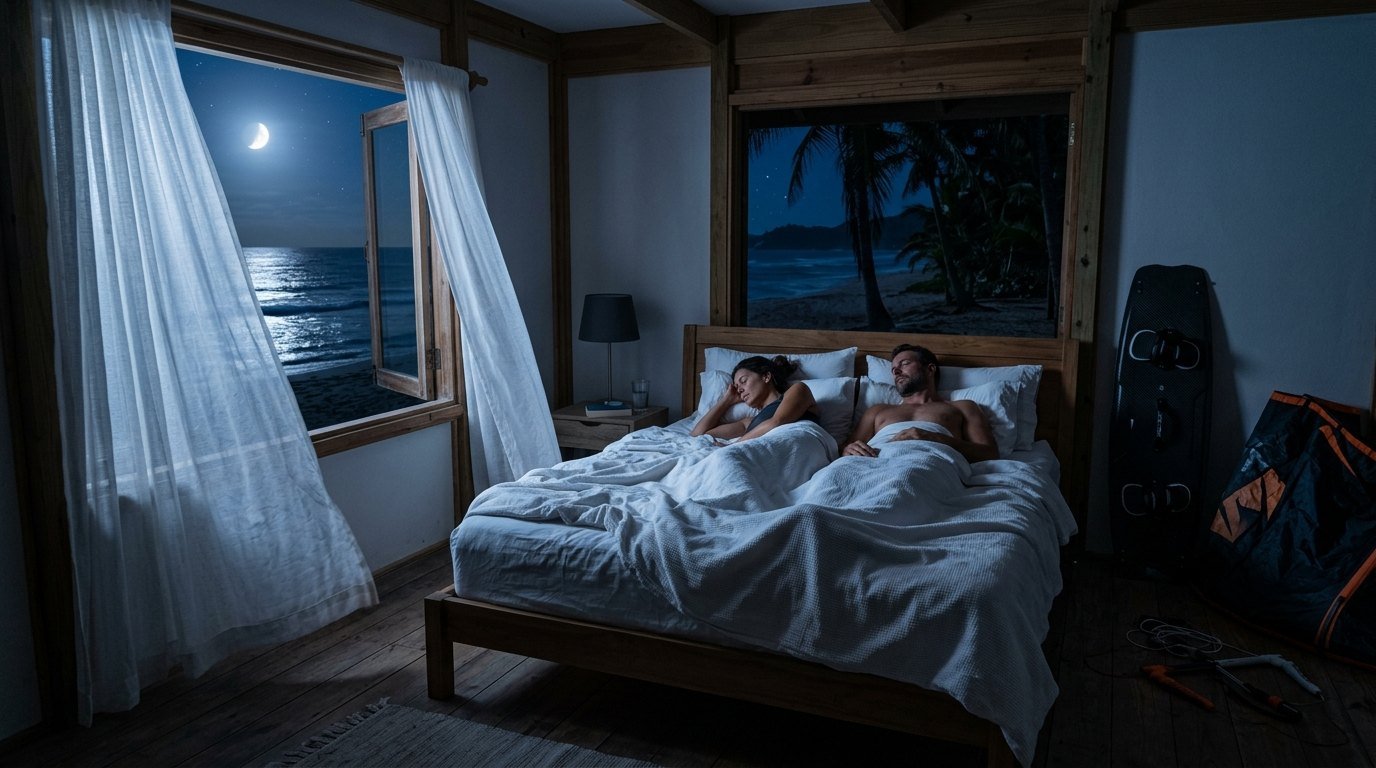
Every session breaks you down a little: micro-tears in muscle, stressed tendons, a nervous system that has been on high alert for hours. The rebuilding doesn't happen on the water. It happens later, and most of it happens while you sleep.
You can have the perfect mobility routine, the best food and a cupboard full of supplements, but if you sleep six restless hours, you're leaving most of the gains on the table.
1. What the Research on Athletes Shows
- More sleep, better performance: In a Stanford study (Mah et al., 2011), college basketball players who extended their sleep toward 10 hours a night for several weeks sprinted faster and shot about 9% more accurately.
- Less sleep, more injuries: Young athletes who slept under 8 hours a night were about 1.7 times more likely to get injured than those who slept more (Milewski et al., 2014).
- Muscle repair needs sleep: A single night of total sleep deprivation cut muscle protein synthesis by about 18% the next day in a 2021 study (Lamon et al.). That's your repair work after a big session, slowed down.
- Deep sleep does the heavy lifting: Most of your daily growth hormone is released in the deep sleep of the first half of the night, which is exactly the sleep that late nights and alcohol cut short.
The Kiter's Sleep Problem
The wind decides your schedule. Dawn sessions mean early alarms, sunset sessions mean adrenaline at bedtime, and kite trips add new time zones, hot rooms and a beach bar every night. None of that is a reason to give up riding. It's a reason to protect the sleep you can control.
2. The Biggest Sleep Killers for Kiters
- Alcohol: A couple of drinks may help you fall asleep, but they fragment the second half of the night, cut REM sleep and keep your heart rate higher. Large datasets from heart-rate monitors show recovery scores drop with each extra drink. One beer after a session is fine; four is a wasted night of recovery.
- Caffeine too late: Caffeine has a half-life of around five hours. In one study, caffeine taken even six hours before bed cut total sleep by more than an hour. Afternoon coffee before a sunset session is borrowing from tonight.
- Adrenaline at bedtime: A late, powered session leaves your nervous system wired. You need a wind-down, not just a shower.
- Heat: Your core temperature has to drop for deep sleep. Hot rooms on kite trips are a classic reason for restless nights.
- Jet lag: Your body clock shifts roughly one hour per day on its own. Flying across six time zones means days of poor sleep unless you help it along.
3. The Kiter's Evening Routine
1. Morning Light, Evening Dark
Your body clock is set by light. Get outside in the morning (checking the wind counts), and dim the lights and screens in the evening. Blue-blocking glasses after dark are a cheap, easy upgrade.
Why it works: Bright morning light and dark evenings make you sleepy at the right time and help you fall asleep faster.
2. The 10-Minute Wind-Down
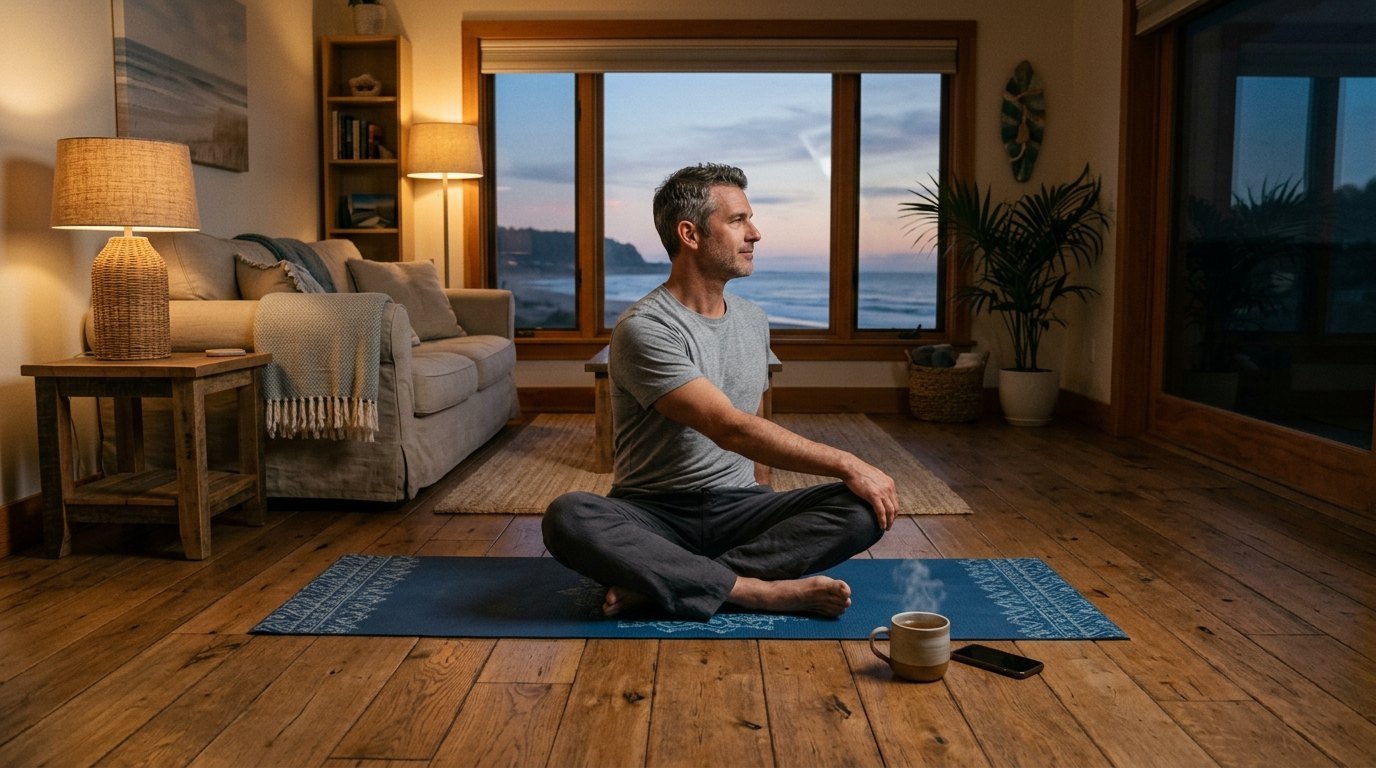
A few easy hip and back stretches on the floor, breathing in for 4 seconds and out for 8. Phone in another room or face down.
Why it works: Long exhales shift your nervous system out of the session's adrenaline and into rest-and-repair mode. The full routine is in The Neurological Hip Lock.
3. Cool, Dark, Quiet
A cool, dark room is the simplest upgrade there is. On kite trips, pack an eye mask and earplugs: rooms near the beach are rarely dark or quiet.
4. Last Meal 2 to 3 Hours Before Bed
Digesting a big meal keeps your body busy when it should be repairing. It also fits nicely with a daily eating window (see The Autophagy Shield).
5. Calming Nutrients
In a Japanese study, 3 g of glycine before bed improved how rested people felt and their next-day alertness. Magnesium is essential for muscle relaxation and nerve function. A warm herbal tea is a nice ritual that tells your body the day is done.
4. On Kite Trips: Beat the Jet Lag
- Shift early: Move your bedtime an hour toward the destination's time zone for a few days before you fly.
- Light is the lever: At the destination, get bright light in the local morning and avoid it in the local evening. Your first session is the best jet-lag medicine there is.
- Eat on local time from day one, and go easy on alcohol on the flight.
- Protect your gut too: New food plus poor sleep is a rough combination. More in Gut Health & the Traveling Kiter.
5. Let Your Watch Be Your Coach
If you wear a sports watch, use it. Heart rate variability (HRV) and your morning resting heart rate are two of the best signs of how recovered you are. A rough rule:
- HRV at or above your normal, resting heart rate normal: go send it.
- HRV well below normal or resting heart rate up several beats: make it an easy day. Mobility, a cruise session, an early night.
- Look at trends, not single nights. One bad night isn't a problem; a week of them is.
I track all of this myself, and it's where I've seen my own changes most clearly. Since I made the evening routine a habit and added the DoNotAge daily sachet (which includes 2 g of glycine and magnesium among its 15 ingredients), my HRV is higher, my sleep scores and body battery are better, and back-to-back windy days don't flatten me like they used to.
Recover While You Sleep (10% Off)
The DoNotAge daily sachet includes glycine, magnesium, NMN, CoQ10 and 11 more ingredients in one morning scoop. It's part of how we recover between windy days. Use discount code KITEHOMIEZ at checkout for 10% off your entire order.
Shop DoNotAge →Free: The Kiter's 10-Minute Flexibility Routine
The mobility and core routine we use before and after sessions, as a free PDF. Plus new videos and posts every few weeks.
This article is for general education and isn't medical advice. Talk to your doctor before starting a supplement or a fasting routine, especially if you are pregnant, have a medical condition or take medication. Some links on this page are affiliate links: if you buy through them, we earn a small commission at no extra cost to you.