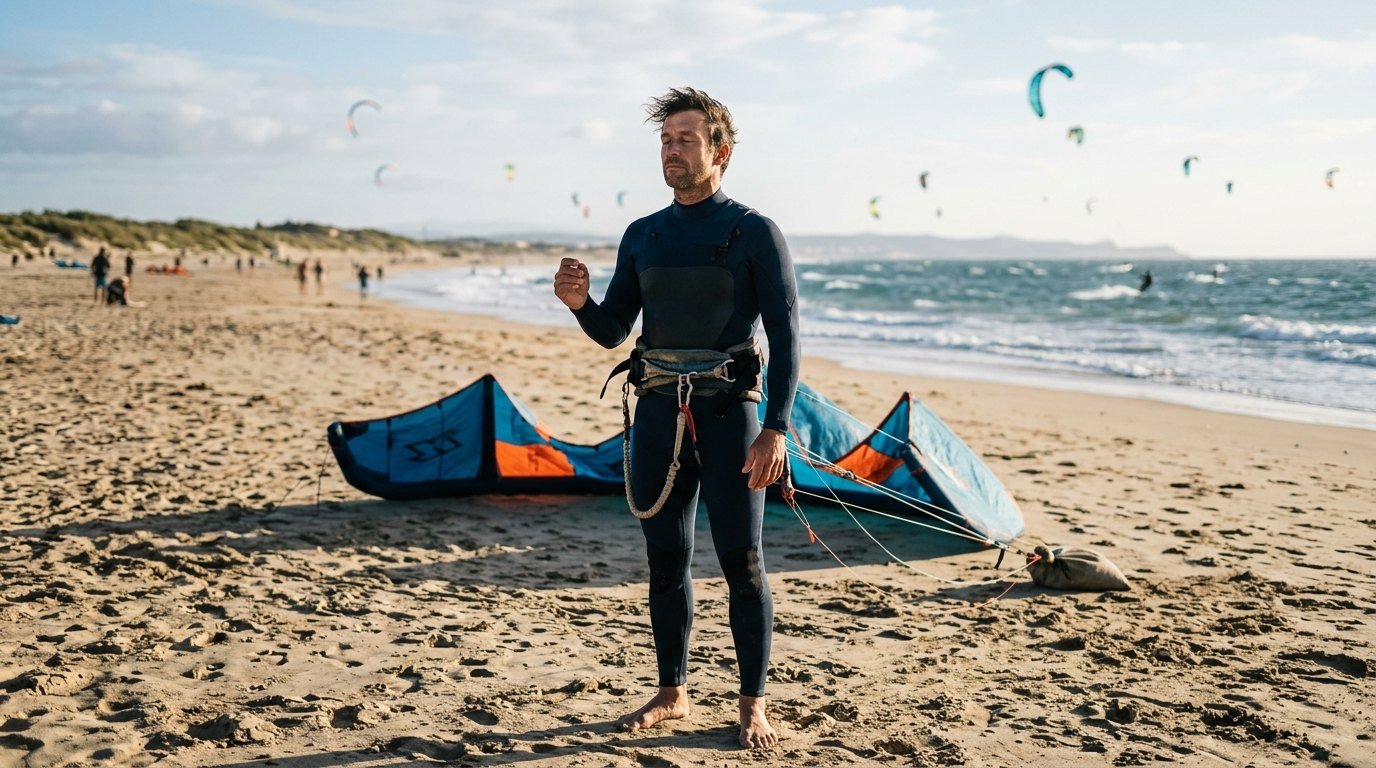
You know the moment. You're edging hard toward the kicker or setting up for a bigger jump than you've ever done, and your body suddenly gets stiff, your breath goes shallow and you bail at the last second. Nothing was wrong with your technique. Your head just hit the brakes.
The mental side of kiting isn't soft stuff. A tense mind makes a stiff body, a stiff body crashes harder, and fear that never gets handled turns into a plateau that lasts for years. The good news: these are skills, and they can be trained like any other.
1. Calm Down Fast: Breathing That Works
Your breath is the one part of your nervous system you can control directly, and it works in seconds.
The Physiological Sigh
Breathe in through your nose, then sneak in a second short inhale on top, then let it all out in a long, slow exhale. Do it before you go for a trick, or while you're waiting for a gust.
Why it works: In a 2023 Stanford study (Balban et al., Cell Reports Medicine), five minutes a day of this "cyclic sighing" improved mood and lowered breathing rate more than mindfulness meditation did. One or two sighs is a quick way to bring the nerves down a notch.
The 4:8 Breath
Same idea, slower: long exhales shift you toward calm focus. Two minutes on the beach while your kite is set up turns pre-session jitters into readiness.
2. Ride It in Your Head First
Mental rehearsal isn't wishful thinking. Decades of sports research, including a large meta-analysis of mental practice studies, show that rehearsing a skill in your head improves performance, especially when it's combined with real practice.
- Close your eyes on the beach and run the trick in real time: the edge, the kite position, the pop, the rotation, spotting the landing, riding away.
- Make it vivid: feel the bar pressure, hear the wind, see the water. First person, not like watching a video of yourself.
- Always land it. If you crash in your head, rewind and do it again until it's clean.
- Five clean reps before the session is enough.
3. One Cue, Not Ten Thoughts
When you commit to a trick, there's no room for a checklist. Pick one short trigger word: "edge", "patience", "look", "push". Research on attention in sport (Gabriele Wulf's work on motor learning) shows that focusing on the effect you want, like "push the board away", tends to work better than focusing on body parts, like "bend your knees". Choose a cue about what the board or kite should do, and say it out loud if you have to.
Self-talk works the same way. A meta-analysis of sports studies (Hatzigeorgiadis et al., 2011) found that deliberate, positive self-talk measurably improves performance. "Commit" beats "don't crash" every time.
4. Working With Fear
- Fear is information. If it's screaming, something might be off: too much wind, too tired, not ready yet. Listen first, then decide.
- One step, not three. Go one step outside your comfort zone: a bit higher, a bit more wind, one new variation. Big jumps in difficulty are where bad crashes live.
- Make the scary thing smaller. Practice the trick lower and slower, on a smaller kite, on flat water. Lots of easy reps build the confidence for the big one.
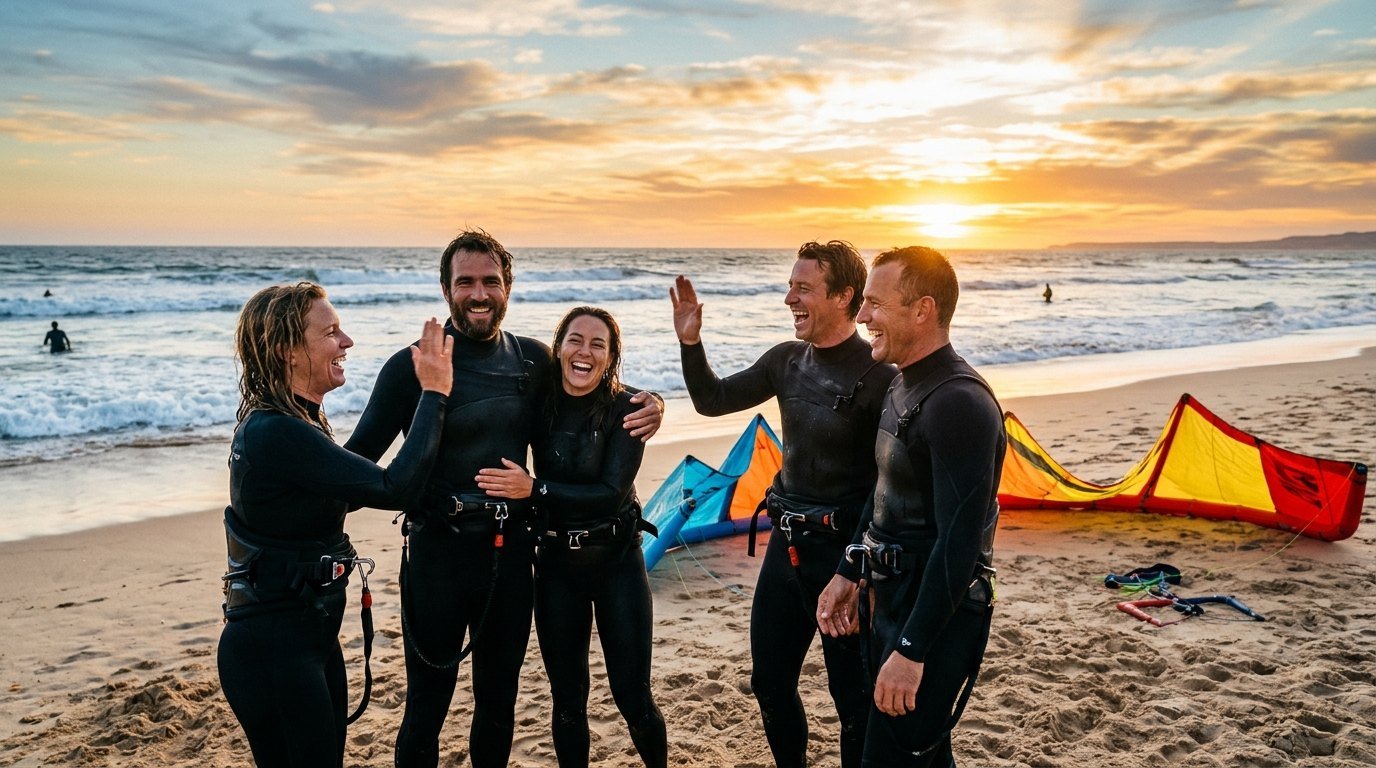
- Celebrate the crashes. A wipeout means you were playing at the edge. Laugh, reset, go again. Riders who can laugh at their crashes stay loose, and loose riders crash softer.
- Know your exits. Practice your safety release and self-rescue on calm days, so they're automatic when it counts. Confidence comes from knowing you can get out of trouble.
Flow: The Sweet Spot
Psychologist Mihaly Csikszentmihalyi described "flow" as the state where challenge and skill are perfectly matched: hard enough to demand your full attention, not so hard that you panic. That's the zone where kiting feels effortless and where you learn fastest. Too easy and you get bored; too hard and fear takes over. Adjust the challenge (wind, spot, trick) to stay in it.
5. Your Crew Is a Longevity Tool
This one surprises people. One of the biggest studies on social life and health, a 2010 meta-analysis of 148 studies (Holt-Lunstad et al.), found that people with strong social relationships had about a 50% higher likelihood of survival over the study periods than people with weak ones. That's a bigger effect than many classic health habits.
- Ride with stoked people. Energy is contagious. A crew that laughs off mistakes keeps you loose and keeps you coming back.
- Find riders slightly better than you. Close enough to learn from, far enough ahead to pull you forward.
- Get coached once in a while and film each other. Thirty seconds of phone footage teaches more than thirty attempts.
- Practice gratitude. Writing down a few good things each day is linked in research to better mood and well-being. On flat weeks and injury breaks, it's what keeps you sane.
We keep it simple: every session, even a bad one, beats a session on the sofa. Ride for the joy, keep the crew close, and the progress follows. For the physical side of riding for decades, start with The Anti-Fragile Kiter and Sleep: The Recovery Tool Every Kiter Is Underusing.
Ride Along With Us
Our kite trips, crashes, progress and the occasional new trick, all on the Kitehomiez YouTube channel.
Subscribe on YouTube →Free: The Kiter's 10-Minute Flexibility Routine
The mobility and core routine we use before and after sessions, as a free PDF. Plus new videos and posts every few weeks.
This article is for general education and isn't medical advice. Talk to your doctor before starting a supplement or a fasting routine, especially if you are pregnant, have a medical condition or take medication. Some links on this page are affiliate links: if you buy through them, we earn a small commission at no extra cost to you.