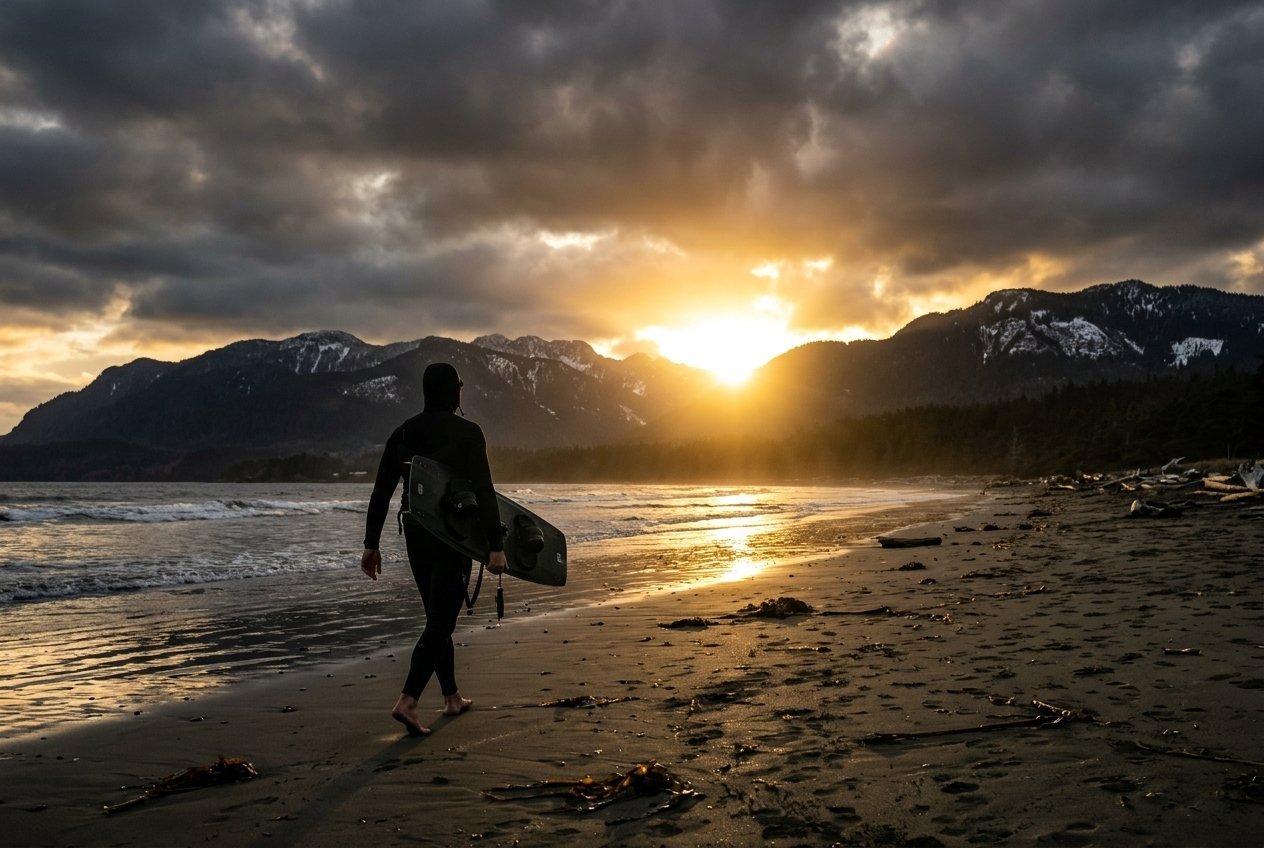
We wrote a whole post about protecting yourself from too much sun on the water (Sun, Salt & Glare). That's the summer problem. In the Pacific Northwest, and anywhere north of about 40 degrees, the winter problem is the opposite: from October to March the sun sits so low that your skin makes very little vitamin D from it, even on a clear day. Add short days, rain and wetsuits that cover everything but your face, and most of us go months with almost no real sunlight.
1. Why Sunlight Matters So Much
- Vitamin D: Your skin makes it from UVB light. It helps you absorb calcium for your bones and supports normal muscle and immune function.
- Your body clock: Bright morning light tells your brain it's daytime, which helps you feel awake in the morning and sleepy at night. More in Sleep & Recovery.
- Mood: Lots of people feel flatter in the dark months. Getting outside in daylight is one of the simplest things that helps.
The Winter Sun Rule of Thumb
If your shadow is longer than you are tall, the sun is too low for your skin to make much vitamin D. In Squamish that's most of the day from about October to March.
2. Five Ways to Get More Light
Morning Light, Every Day
Ten to twenty minutes outside within an hour of waking, even when it's cloudy. Outdoor light on a grey day is still many times brighter than your kitchen. A walk with the coffee counts.
Ride the Midday Sessions
Winter storm sessions often happen midday anyway. Take the hood off between runs when it's safe and warm enough, and enjoy what sun there is.
Eat Your D
Oily fish (salmon, sardines, mackerel), eggs and some mushrooms add a bit. It's hard to get enough from food alone, but it all helps, and oily fish brings omega-3s too.
Plan a Sun Trip
A winter kite trip south is the best medicine we know: wind, warm water and real sun. Pack for the heat with our hydration guide and keep your stomach happy with Gut Health & the Traveling Kiter.
Check, Don't Guess
A simple blood test shows your vitamin D level. Ask your doctor about it at your next check-up, especially if you rarely get outside in winter. It's the easiest way to know where you stand.
3. D3, K2 and Why They Go Together
Vitamin D helps you absorb calcium. Vitamin K2 helps direct that calcium to where it belongs, in your bones. That's why you often see them paired, and why both matter for a kiter's frame: strong bones are what turn a hard crash into a bruise instead of a break. Our bone strength guide covers the training side.
Through the winter we get ours from the DoNotAge daily sachet: one scoop in water every morning, with vitamin D3 and K2 alongside 13 other longevity ingredients, so we don't need a separate pill. On dark mornings it's a nice little ritual to start the day.
Keep the Sunshine Vitamin Going All Winter (10% Off)
The DoNotAge daily sachet includes vitamin D3 and K2, plus the rest of our morning longevity stack, in one scoop. Use discount code KITEHOMIEZ at checkout for 10% off your entire order.
Shop DoNotAge →4. Then Spring Comes Back
The days start getting noticeably longer in February, and by April the thermals come back and the sun is high again. Then it's back to sunscreen, a hat and polarized glasses. Until then: get outside every morning, chase the storm sessions and keep your levels topped up. Spring-you will thank you.
Free: The Kiter's 10-Minute Flexibility Routine
The mobility and core routine we use before and after sessions, as a free PDF. Plus new videos and posts every few weeks.
This article is for general education and isn't medical advice. Talk to your doctor before starting a supplement or a fasting routine, especially if you are pregnant, have a medical condition or take medication. Some links on this page are affiliate links: if you buy through them, we earn a small commission at no extra cost to you.