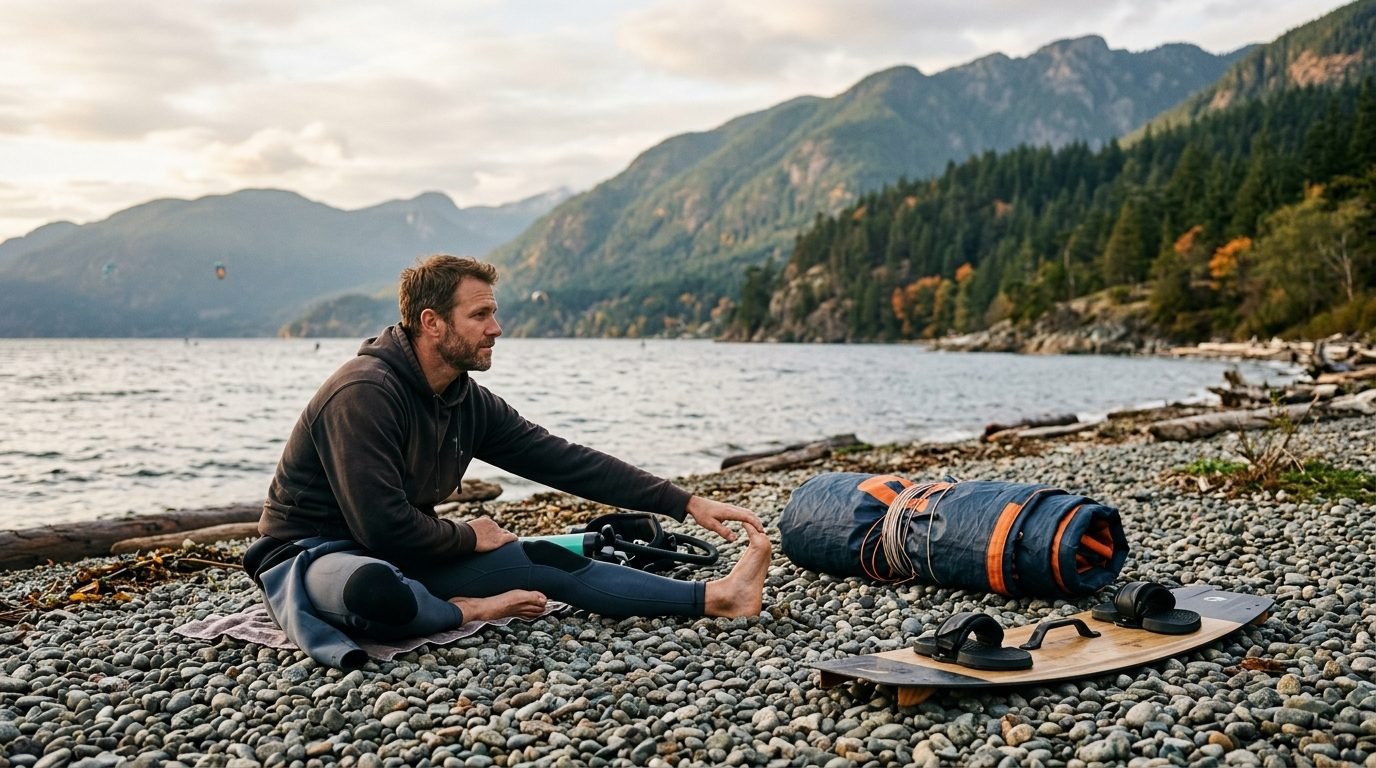
We just wrapped up our season with the North West Wind Open in Squamish and the first fall storm at Boundary Bay. Big boosts, hard landings, lots of crashes, cold water and an awards night that went late. Fun? Absolutely. Easy on the body? Not at all. The riders who still kite hard in their 50s, 60s and beyond aren't the ones who never crash. They're the ones who recover well, every single time.
1. What a Big Kite Day Does to Your Body
- Landings and crashes: Every big air landing loads your knees, hips and spine with several times your body weight. A dozen of those plus a few wipeouts adds up.
- Grip and shoulders: Hours of holding the bar in gusty wind leave your forearms and shoulders tired. More in Shoulders, Elbows & Wrists.
- Cold water: Your body burns extra energy just to stay warm, and stiff, cold tendons are more vulnerable.
- Adrenaline and late nights: Comp days, travel and celebrations cut into sleep, which is when most repair happens.
2. The 48-Hour Recovery Plan
Right After the Session
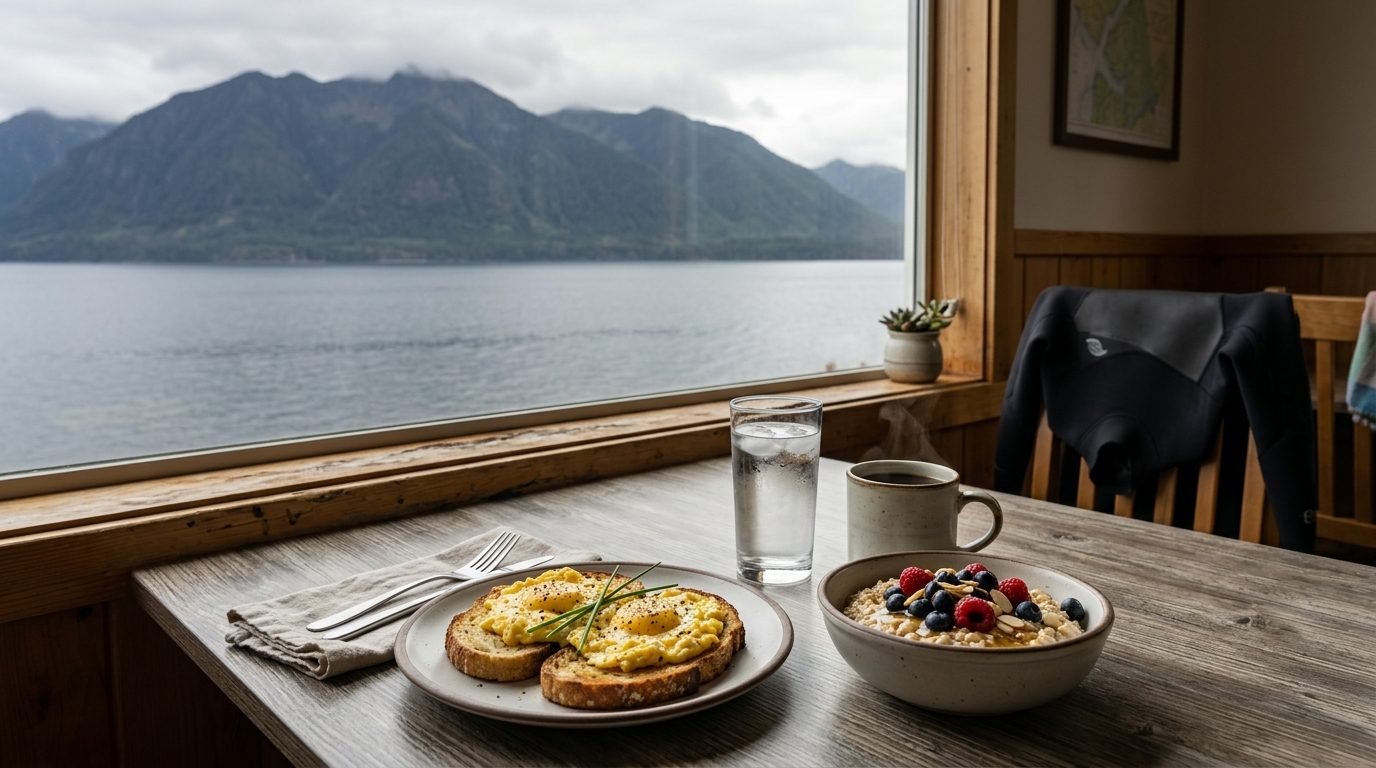
Get dry and warm first. Then eat a real meal with protein and carbs (a burger at the awards night counts) and drink water before the celebration drinks. Muscles refuel fastest in the first hours after hard exercise.
That Night
Aim for a full night, even after a late one. A cool, dark room and no screens for the last half hour help. Our sleep guide has the full routine.
The Next Morning
Ten minutes of easy mobility beats lying on the couch. Our free flexibility routine (below) is exactly this: hips, spine, shoulders and hamstrings, gently. Add a walk or an easy swim if you can.
Day Two
Go over your body: anything swollen, any joint that feels unstable, any pain that's getting worse instead of better? That's a reason to see a physio before the next session. Normal soreness should be fading by now.
3. Use the Off-Season to Build the Next One
When the thermal season ends, most riders simply stop. That's a waste. The fall and winter months are the best time to build what kiting itself doesn't train:
- Tendons: Slow, heavy strength work makes them tougher. See The 100-Year Frame.
- Bones: Water sports don't build bone; jumping and lifting do. See Bones That Survive the Crashes.
- Engine: A bigger aerobic engine means less fatigue in long sessions. See VO2 Max.
- Back and hips: The harness and the constant twisting are hard on both. See Defending the Lumbar Spine and The Neurological Hip Lock.
4. What We Take Every Day
Training, food and sleep do most of the work. Supplements are the layer on top, and this is the one we use: the DoNotAge daily sachet, one scoop in water every morning before a session. It packs 15 longevity ingredients, and several of them match exactly what a hard kite weekend asks for:
- Glycine (2 g) and magnesium: Support for deeper sleep and relaxed muscles after a long day.
- Ca-AKG, hyaluronic acid, vitamin D3 and K2: Building blocks for tendons, joints and bones.
- NMN, CoQ10 and Nitralis: Cellular energy, so the second session of the weekend doesn't feel like the fourth.
- Resveratrol, quercetin, sulforaphane and spermidine: The longevity side: helping your cells clean up and stay resilient, season after season.
On comp days and storm days we also add the DoNotAge Performance add-on: creatine for power and repeated efforts (one of the best-studied sports supplements there is), extra Nitralis, and NAC. And on kite trips, their Probiotic keeps travel stomachs happy (more in Gut Health & the Traveling Kiter).
Recover Like You Plan to Ride at 80 (10% Off)
The DoNotAge daily sachet covers sleep, joints, bones and cellular energy in one morning scoop. Add the Performance add-on for comp and storm days. Use discount code KITEHOMIEZ at checkout for 10% off your entire order.
Shop DoNotAge →5. The Long Game
Watching Kai and Yulin take the wins this year, and seeing riders of every age out on the Spit, is the whole point of this site. Kiting is a sport you can do for a lifetime, if you treat recovery as part of the sport. Crash, laugh, recover, and send it again next season.
Want the full story of the weekend? Read our North West Wind Open 2026 recap, with the results and the full video.
Free: The Kiter's 10-Minute Flexibility Routine
The mobility and core routine we use before and after sessions, as a free PDF. Plus new videos and posts every few weeks.
This article is for general education and isn't medical advice. Talk to your doctor before starting a supplement or a fasting routine, especially if you are pregnant, have a medical condition or take medication. Some links on this page are affiliate links: if you buy through them, we earn a small commission at no extra cost to you.